The OR Is the Hospital's Highest-Margin Asset. AI Treats It That Way.
Surgical services typically generate 60 percent of hospital margin from 25 percent of capacity. The operational AI opportunity in this segment compounds across utilization, turnover, supply, and revenue cycle. Sonatafy installs production AI integrated with your OR scheduling, EHR, and supply chain systems, delivered through Managed Delivery PODs.
The Pains That Show Up in Every Surgical Service Line Review.
Surgical service line leaders share a consistent set of operational pains that compound across the day, the week, and the quarter. Here are the three we hear most, and the AI systems we build to address each.
What This Looks Like in Surgical Service Line Terms.
For a hospital surgical department running 12 to 20 ORs at 8,000 to 14,000 cases per year, the operational AI opportunity is in the eight-figure range annually. The diagnostic produces a sized opportunity specific to your surgical service line based on case volume, OR count, payer mix, and current operational state.
8 to 15 percent
Capacity recapture from block optimization, predictive case scheduling, and first-case-on-time-start improvement. For a 16-OR department running 10,000 cases at average margin, this is roughly $4M to $9M in incremental margin annually.
5 to 12 percent
Surgical supply cost reduction from preference-card optimization, implant utilization analytics, and waste reduction. On a $40M surgical supply base, this is $2M to $5M annually.
3 to 6 percent
Surgical revenue cycle improvement from coding accuracy, authorization completeness, and denial reduction specific to surgical service lines. On $180M in surgical net revenue, this is $5M to $11M annually.
Ranges reflect benchmarks observed across published surgical operations research and Sonatafy engagement experience.
The POD Model, Built for the Surgical Operating Environment.
Surgical operations sit at the intersection of clinical workflow, supply chain, finance, and physician relationships. AI in this environment fails when the engagement model treats it as a single-system problem. Sonatafy installs production systems that span the entire perioperative chain, from scheduling through PACU through cost-per-case reporting.
Every surgical engagement runs through a POD with a US-based principal engineer leading architecture and delivery. Senior LATAM AI engineers and integration specialists execute. Our Principal Data and AI Architect leads the practice. A perioperative integration specialist owns the connections to OR scheduling, supply chain, and EHR documentation.
Why Sonatafy, Not Your OR Scheduling Vendor or a Consulting Firm.
OR scheduling vendors sell modules built for the average department. Integration with your supply chain platform or surgical revenue cycle is partial. AI features are bolt-on, priced separately, and run on the vendor roadmap.
Consulting firms deliver maturity assessments and vendor selection recommendations. The team that builds the deck does not build the system. Implementation is your problem or theirs at three times the price.
Sonatafy installs production AI systems integrated across OR scheduling, EHR, supply chain, and revenue cycle. US principal engineering owns the outcome. Senior LATAM AI engineers execute. HIPAA-aligned from architecture, with documented handoff to your team.
Surgical operational AI is a perioperative chain problem. We treat it as one.
Built for the Surgical Regulatory Reality.
HIPAA, Joint Commission perioperative standards, CMS surgical quality measures, and accreditation body requirements are addressed in engagement scoping.
HIPAA-Aligned Engagement Model
BAA execution, PHI handling protocols, and audit logging built into every surgical engagement.
Joint Commission Perioperative Standards
System design accommodates Joint Commission perioperative documentation, time-out protocols, and survey readiness requirements.
CMS Quality Reporting (PCHQR, OQR, IQR)
Architecture supports CMS surgical quality measures, including PCHQR, OQR, and IQR data submission obligations.
State Surgical Licensure Fluency
California, Texas, New York, Florida, and other state-specific surgical service line requirements addressed during discovery.
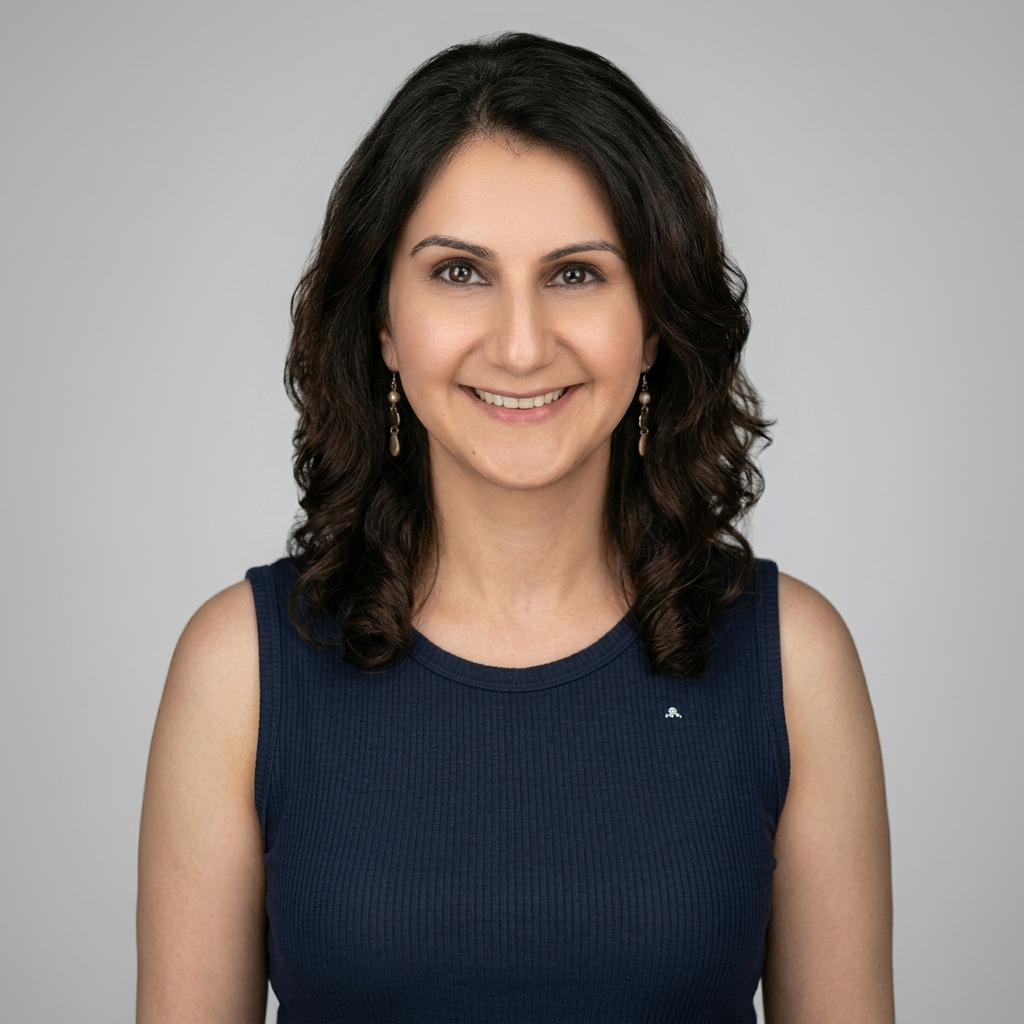
Principal Data and AI Architect (Practice Lead).
Our Principal Data and AI Architect leads Sonatafy's Healthcare Providers Practice and the AI systems engineering layer across every engagement. In surgical environments, her work focuses on production AI architecture that integrates across the perioperative chain, from OR scheduling through supply chain and revenue cycle, with measurable operational impact at the surgical service line P&L.
Surgical operations are the highest-leverage operational AI environment in healthcare. Every minute of OR time recovered, every supply cost reduction, every authorization gap closed shows up in the next month's P&L. The feedback loop is fast, and that is what makes production AI here so valuable.
Patterns We See in Hospital Surgical Departments.
The Schedule Is the System
Surgical operations flow downstream from the OR schedule. AI applied at the schedule layer compounds across throughput, turnover, supply, and revenue cycle. Most surgical AI initiatives apply AI at the wrong layer.
The Coordination Tax Across the Perioperative Chain
The perioperative chain spans pre-op, OR, PACU, supply chain, scheduling, and revenue cycle. Every operational decision requires reconciliation across systems. AI surfaces and reduces this tax.
The Ownership Gap in Surgical AI
Surgical AI initiatives stall when no single person owns the outcome across the full perioperative chain. Vendors own modules. Consultants own decks. Sonatafy's principal engineer model closes this gap.
Size the Surgical Operations AI Opportunity.
The five-minute diagnostic produces a sized opportunity for your surgical service line based on case volume, OR count, payer mix, and current operational state. Built for OR directors, surgical service line VPs, and perioperative leadership.